
Types of barcode label:
Barcode labels come in two types at Al Emteyaz. They differ a lot in performance and printing method. Picking the wrong one can mean reprinting the whole batch later:
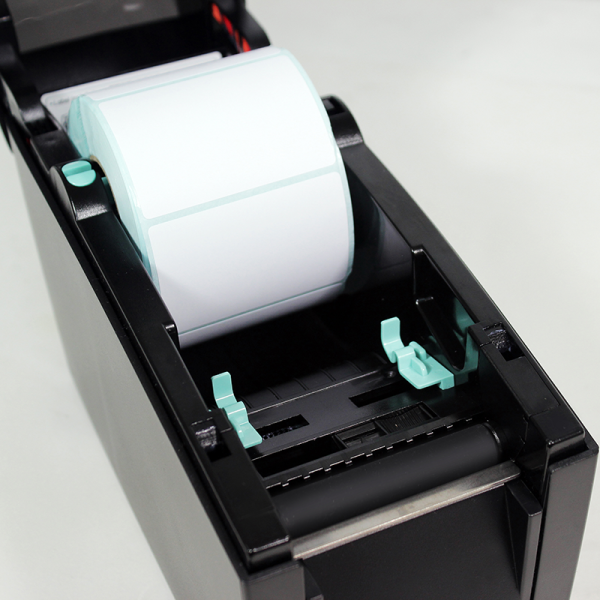
Thermal paper barcode:
- Economical. For short-life applications only.
- Printed directly by heat, with no ribbon needed.
- Sensitive to sunlight, strong light, friction, and heat.

Thermal plastic barcode:
- Resistant to tearing and humidity, and waterproof.
- Printed directly by heat, with no ribbon needed.
- Sensitive to sunlight, strong light, friction, and heat.
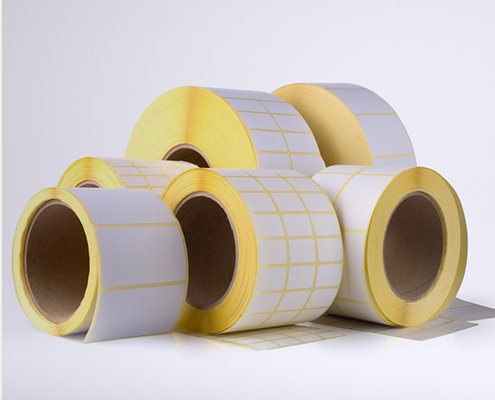
Regular paper barcode:
- A good choice for long-life applications that need the data to stay clear for a long time.
- Requires a ribbon in the printer.
- Resistant to light, friction, and heat.
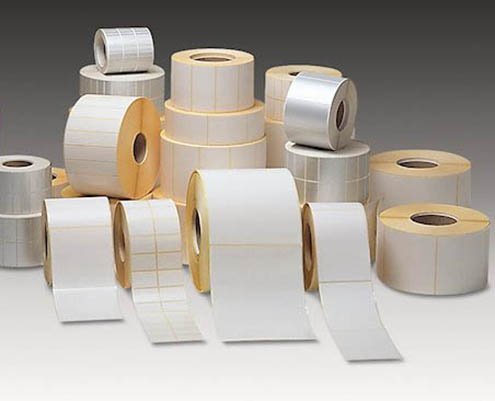
Other materials possible
- Requires a ribbon in the printer.
- We can print on any adhesive material we have, based on how you use it.
- Up to 8 colors can be printed with flexo plates.
Printing options for barcode labels
A barcode label is not limited to one type of data. It can be printed in whatever way suits your tracking process:
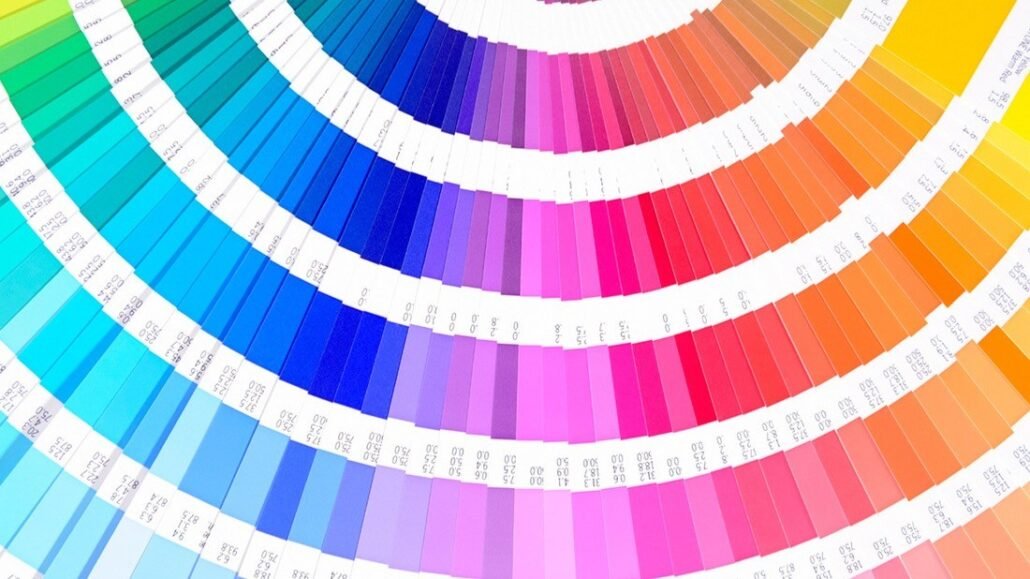
Full-color design printing
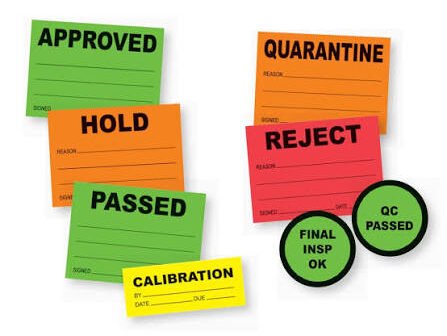
Custom printing for your use
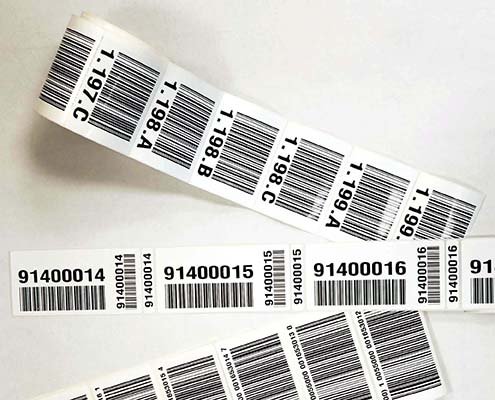
Serial number printing

Colored barcode label

blank white barcode label
Where it is used in practice:
• Warehouses and distribution centers: track units, shelves, and shipments accurately.
• Hospitals and labs: mark samples and files with unique numbers or data.
• Product expiry dates: printing variable dates on each production batch.
• Electronic scales: in malls, bakeries, and shops, to print the weight and price of each product instantly.
Al Emteyaz is an approved printer of GS1 Jordan
Al Emteyaz is an officially approved printer of GS1 Jordan. GS1 Jordan is the official body that issues and approves global barcode numbers in Jordan. This approval gives you added confidence that the barcode label you print meets the approved technical standards, and helps make sure it works with the reading and scanning systems used in commerce.
Thermal vs. regular barcode label
| Criterion | Direct thermal barcode | Standard barcode (with ribbon) |
|---|---|---|
| Needs a ribbon in the printer | ✅ No ribbon needed | ⚠ Needs a ribbon |
| Lifespan | ⚠ Short — for temporary use | ✅ Long — for permanent use |
| Sensitivity to heat, UV light and friction | ❌ Very sensitive | ✅ Fairly resistant |
| Cost | ✅ Lower | ⚠ Relatively higher |
| Best for | Warehouses, labs, expiry dates and scales. | Maintenance, general products, and long-term storage and transport. |
Get consultation
Ask anything on WhatsApp. We'll guide you step by step.
Get quote
Your price in one minute. We follow up directly.
FAQs:
How do I choose the right type?
The key factor is how long the label needs to stay readable.
If the use is temporary, like a shipping label for a parcel that will be opened within days, thermal is enough and saves cost. If the label will stay on the product for months or years, or face harsh storage conditions, the right choice is the regular type printed with a ribbon. That avoids any fading that could block scanning later and cause unnecessary operating losses.
Is barcode label only available on paper, or are other materials available?
Of course. Your barcode can be printed on any label type we offer, not only on paper.
Are there standard sizes for barcode labels?
Yes. Standard sizes include a scale label at 6 × 4 cm and a barcode label at 3.8 × 2.5 cm. You can also get any other size made to order.
Does barcode reading accuracy differ between thermal and regular types during automatic scanning?
In principle, there is no difference in reading accuracy between the two types. However, thermal labels turn from white to yellow after months of exposure to heat, which may affect how clearly they scan over time.
Is this type right for your product?
Not sure a barcode label is the right choice? Browse the other label types and compare what each one offers before you decide.
Other label types you may like:
الامتياز لطباعة الليبل اللاصق
