
Sorted by target group
What the veterinary and agricultural pesticide sector needs:
Explore the options you can use with Al Emteyaz for label printing.
Coloured digital printing for small runs and many designs
- You can order small runs of 500 labels, with no plate costs.
- Delivery usually takes 2 to 4 working days.
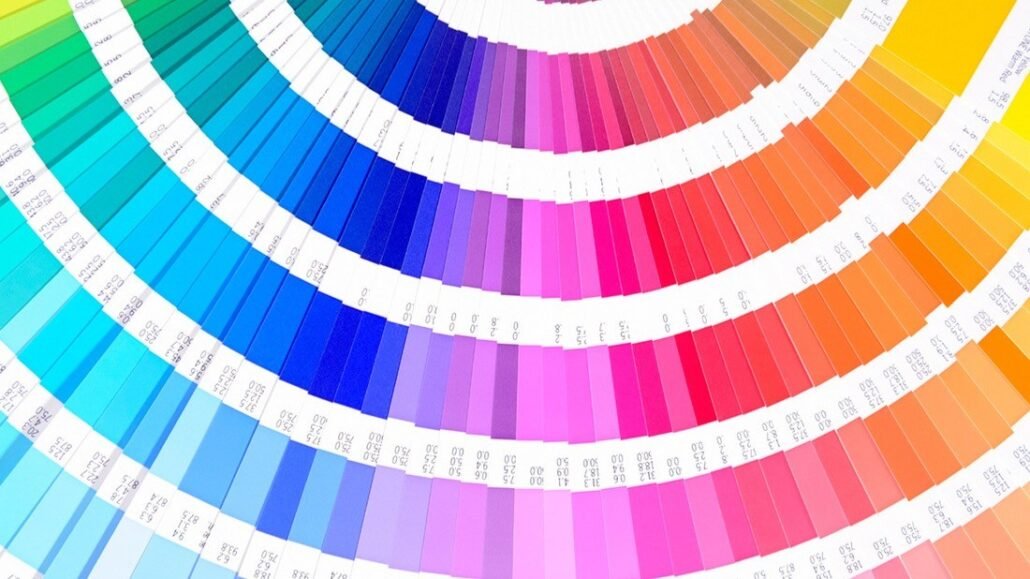
Colour flexo printing for large runs
- Suited to fixed designs printed again and again all year round.
- It relies on plates, and the cost per label drops as the quantity grows, which helps factories get competitive prices.
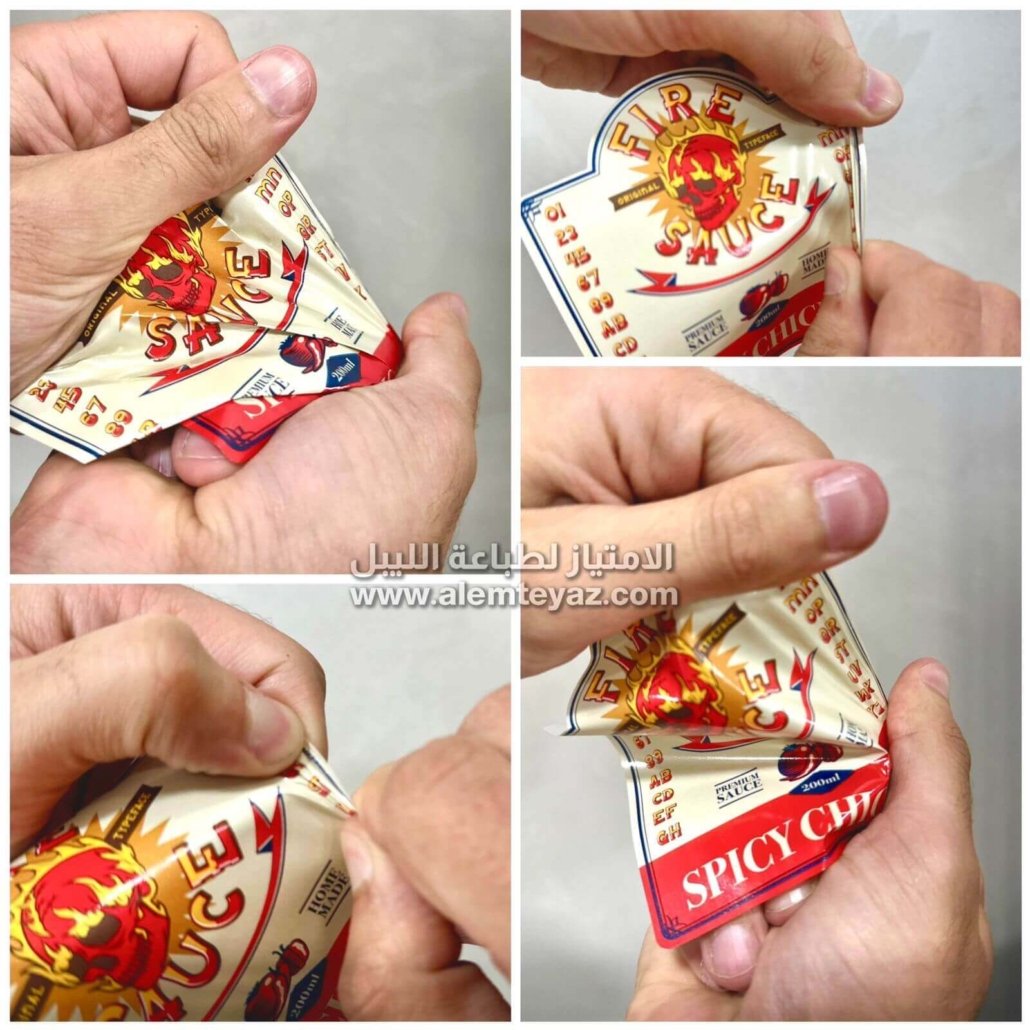
Moisture-resistant plastic label
- A durable material that resists moisture, alcohol and disinfectants, and does not tear with heavy use.
- It is the most requested by factories because it is easy to run on automatic labelling machines.
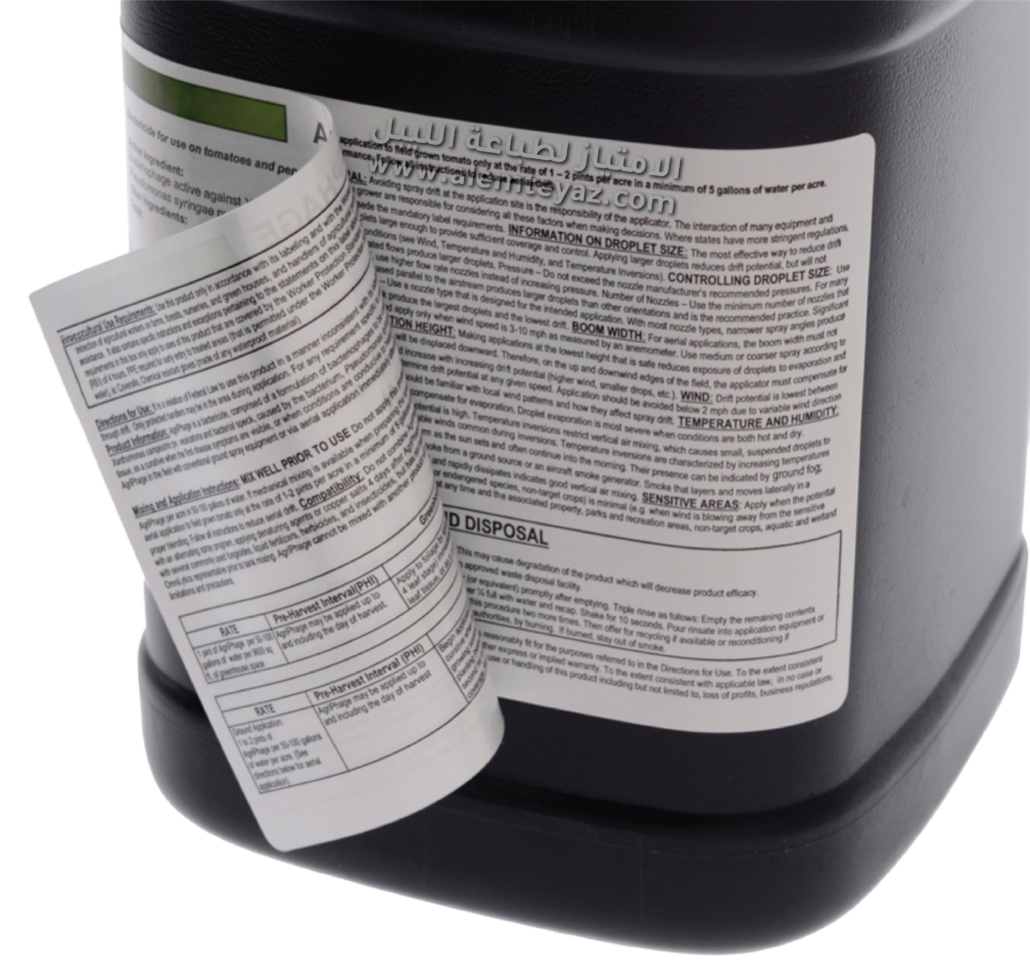
Multi-layer printing
- It fits usage instructions, warnings and information in several languages, without making the pack bigger or adding a separate leaflet.
- A practical fix for products made for export, and for small packs that do not have room for all the required details.
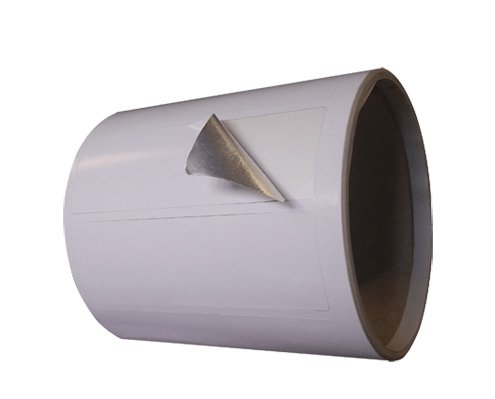
Hard-to-remove adhesive
- Most factory owners have labels peeling off by the time they reach the distributor, for example in Egypt, Sudan or Yemen, where temperatures are high.
- We supply this type of adhesive for gallon containers and cartons, because of their rough surface and the constant label peeling problem they face.
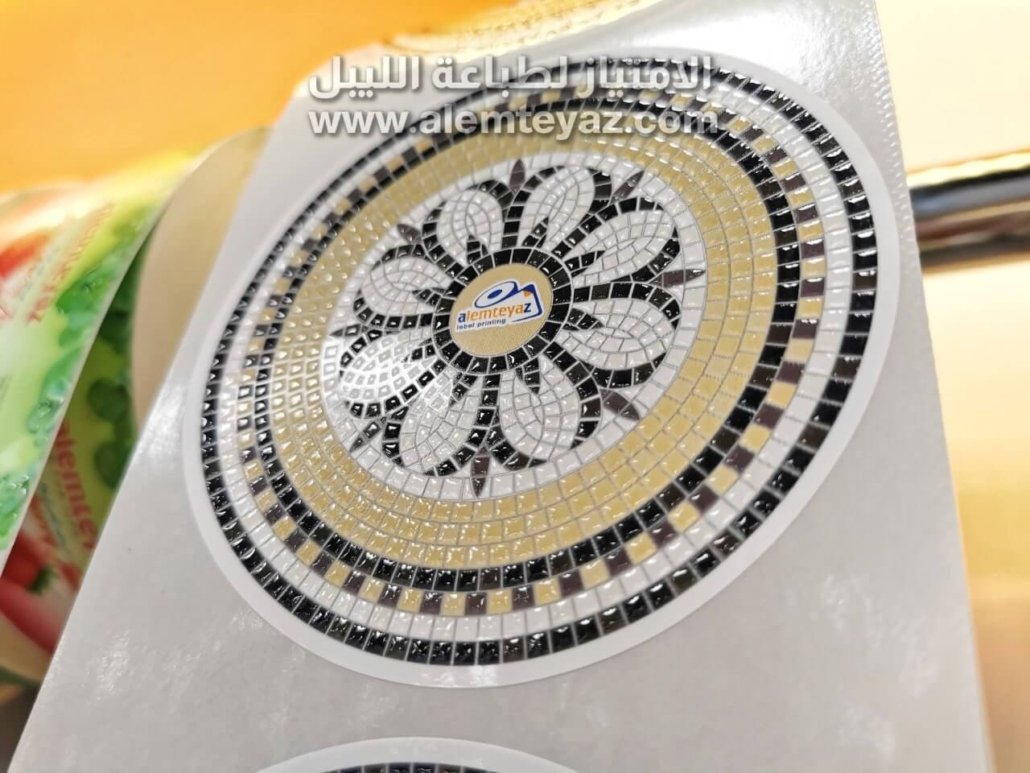
Adding spot UV or raised effects on the label
- A trade agent may tell you they want a pack with an eye-catching look.
- This option fits factories’ wish to meet their agents’ needs and offer extra competitive features in printing.
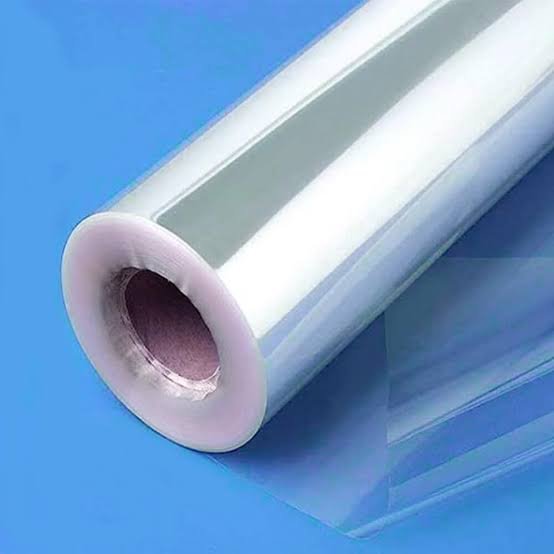
Adding a protective layer: cellophane or varnish
- The label surface may be sensitive to the solvents used in pesticides or fertilisers.
- So it is very important to protect the surface, whether with cellophane or varnish.
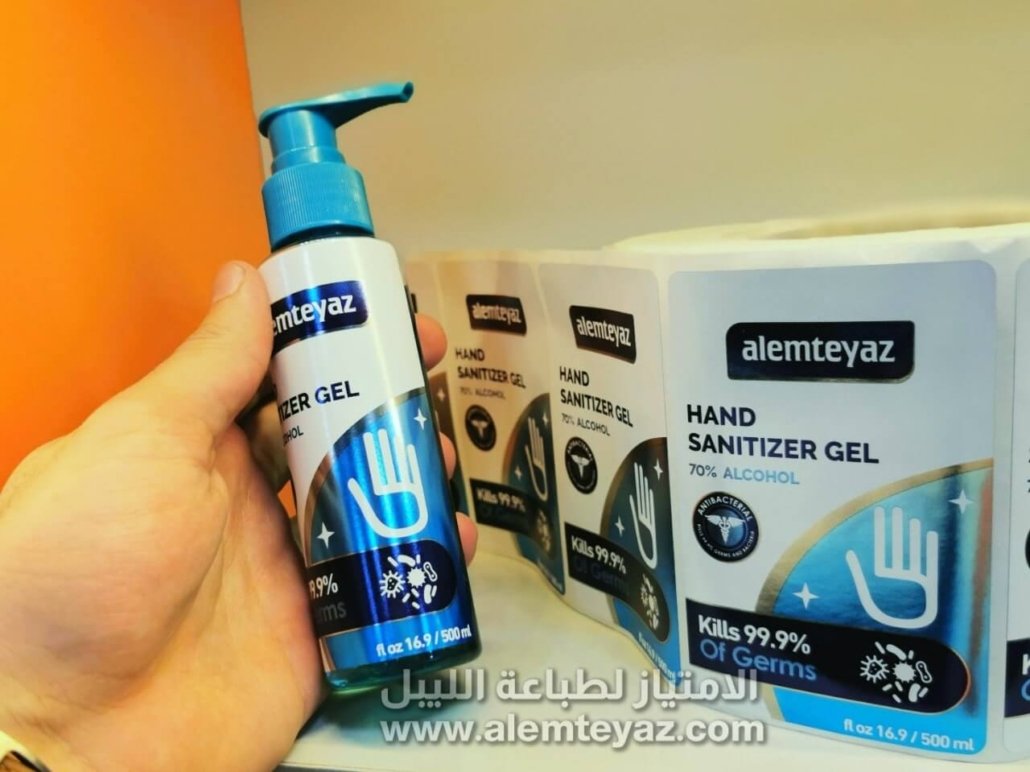
Metallic silver adhesive
- With so much competition between factories, this option adds good looks. Shiny metallic colours stand out on the shelf and raise the value of the packaging.
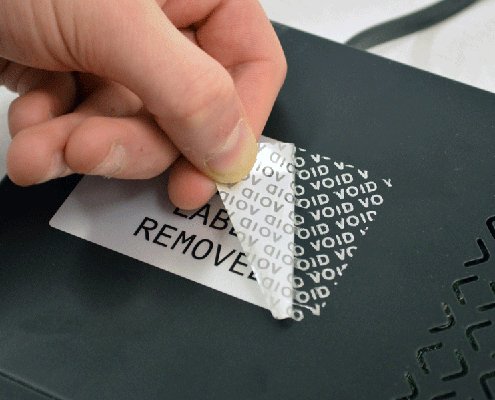
Tamper-evident label for packs
- The label goes over the nozzle of the bottle or the opening of the can, so it cannot be opened without damaging it and leaving a clear mark.
- It protects pesticide packs from copying and tampering before they reach the farmer, and keeps the product safe.
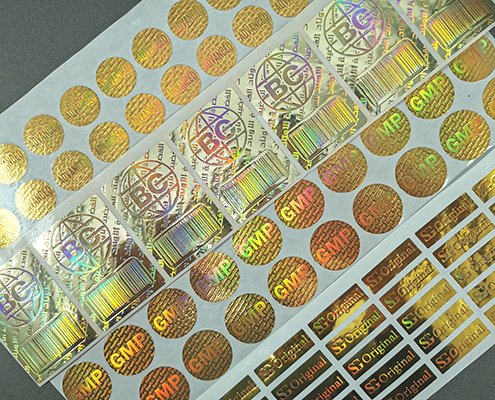
Hologram printing that prevents counterfeiting
- Many pesticide factory owners suffer from their products being forged and copied.
- This type of printing protects by adding a stamp that proves the product is genuine and not a copy.
Get consultation
Ask anything on WhatsApp. We'll guide you step by step.
Get quote
Your price in one minute. We follow up directly.
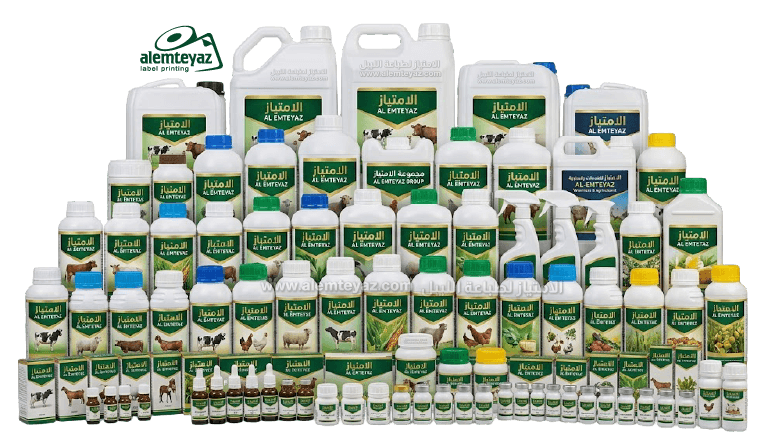
This sector covers five markets with different requirements:
Veterinary medicines and preparations. Antibiotics, vaccines and solutions, in small glass bottles or custom plastic bottles.
Feed supplements and additives. Vitamins, minerals and performance enhancers.
Agricultural pesticides. Insecticides, herbicides and fungicides, liquid and powder, in packs from 100 ml up to drums.
Fertilisers and soil conditioners. Foliar, compound and organic fertilisers.
Livestock supplies. Disinfectants and sanitisers for barns and farms.
One wrong file can cost you a whole batch.
Mandatory label information changes over time. A change in formula, a decision by the registration body, entry into a new market, or an update to the safety period can all cause it. The costliest mistake is printing an old version of the design. You only find out after the goods reach the market, and then the whole batch has to be pulled back instead of a single run.
To avoid this, use this process:
- Archive per product: The approved file for each product is saved, and every production order starts directly from this version.
- Version numbering: Each change gets its own number, so you can tell which version was printed in which run and when.
- Check before production: We confirm with you that the saved version is the latest before any reorder.
Protective layer: a must-have
The label spec for this sector is not complete with the material alone. The printed surface needs a layer that keeps it clean and protects it from scratches and rubbing. It also guards against contact with organic solvents in pesticides, and with alcohol and disinfectants in veterinary products.
This is done in one of two ways: Gloss varnish or gloss cellophane (lamination). Both protect the ink from solvents, but not to the same degree. Cellophane is stronger, and varnish costs less. Solvents in pesticides, and alcohol and disinfectants in veterinary products, wipe off exposed ink. With a protective layer, repeated rubbing or brief contact does not affect the clarity of the data.
The difference between them is protection level and cost, and we pick the better fit after testing.
Challenges facing the veterinary medicines and agricultural pesticides sector:
1. Why does the label peel off the pack after time in storage? What is going on?
Label peeling is not a fault in the label. It is a compatibility problem between three parties: the pack surface, the product inside, and the storage and transport conditions. A change in just one of them is enough to break a setup that ran without complaint for years.
That is why we do not judge from a distance. We check your actual pack and test on it before any commitment. Most cases that reached us were described as “no solution”, but they were solvable once diagnosed properly under a protocol made for this sector.
2. Print shows damage during transport. Is the ink to blame?
Ink is rarely the cause. Print gets scuffed off when the label surface is left exposed to what it cannot handle: friction during transport, or contact with solvents.
Several options protect the surface. They differ in cost and level of protection, and each one has its right place. Choosing the wrong one here costs you twice: extra cost on the product on one side, and weaker protection on the other.
3. How do we keep colour consistent between runs?
The fix is measurement, not guesswork. The human eye is affected by light and fatigue over the course of a day. We have a colour checking system that turns your brand colour into a recorded digital value under your name, and every later run is measured against it. We walk you through the details of the system during a visit.
4. We export to several markets, and each agent has its own design. How do we manage these files without mixing them up?
The answer is separate archives: one file for each country and one for each agent. The design numbering tells you what was printed, when, and under which approval.
That is why a reorder starts from a ready point, not from zero. Supply time gets shorter, rather than being spent on checking files and confirming the right version. Customers who export to more than one market notice the difference in colour consistency from the second order.
5. How much does the label cost?
There is no single number that fits every case. Any figure given before we know the details is only a guess. The cost is built on decisions made before printing: the label layout, its size, its colour system, and the quantity for each item. Changing one of these decisions changes the price noticeably, sometimes in your favour, without any loss in quality.
Send us the details of your product and pack, and you get a quote based on your case, not on the market average.
Get consultation
Ask anything on WhatsApp. We'll guide you step by step.
Get quote
Your price in one minute. We follow up directly.