
Classified by target audience
What cleaning and chemical manufacturers need: we provide every printing solution based on the nature of the product.
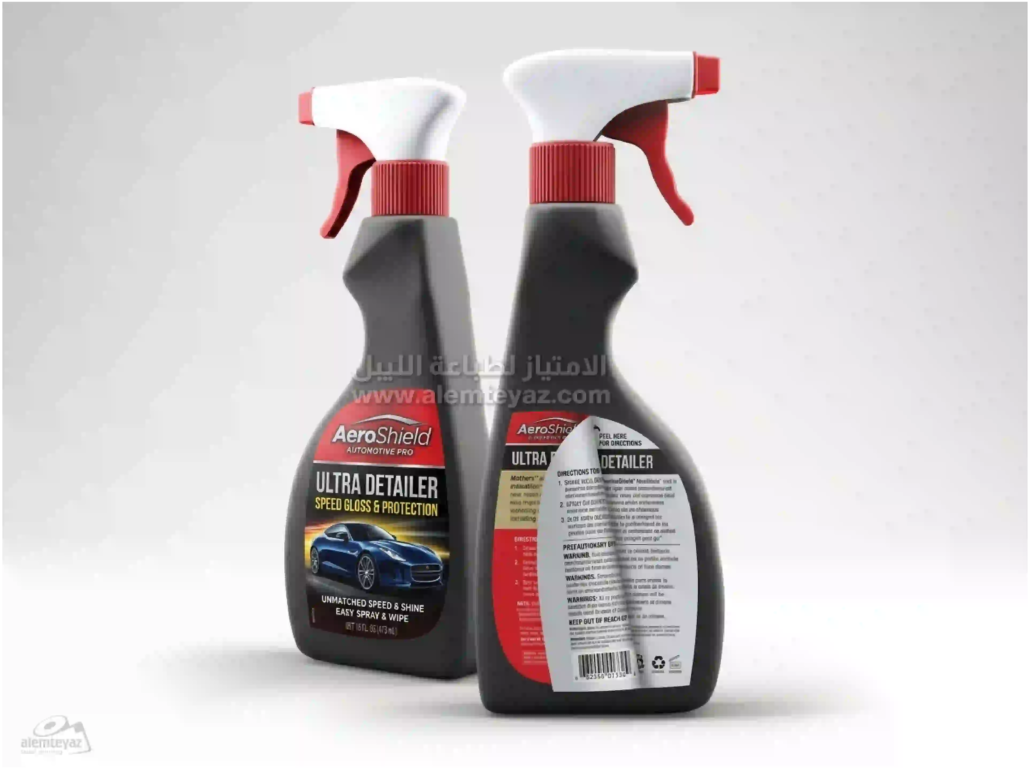
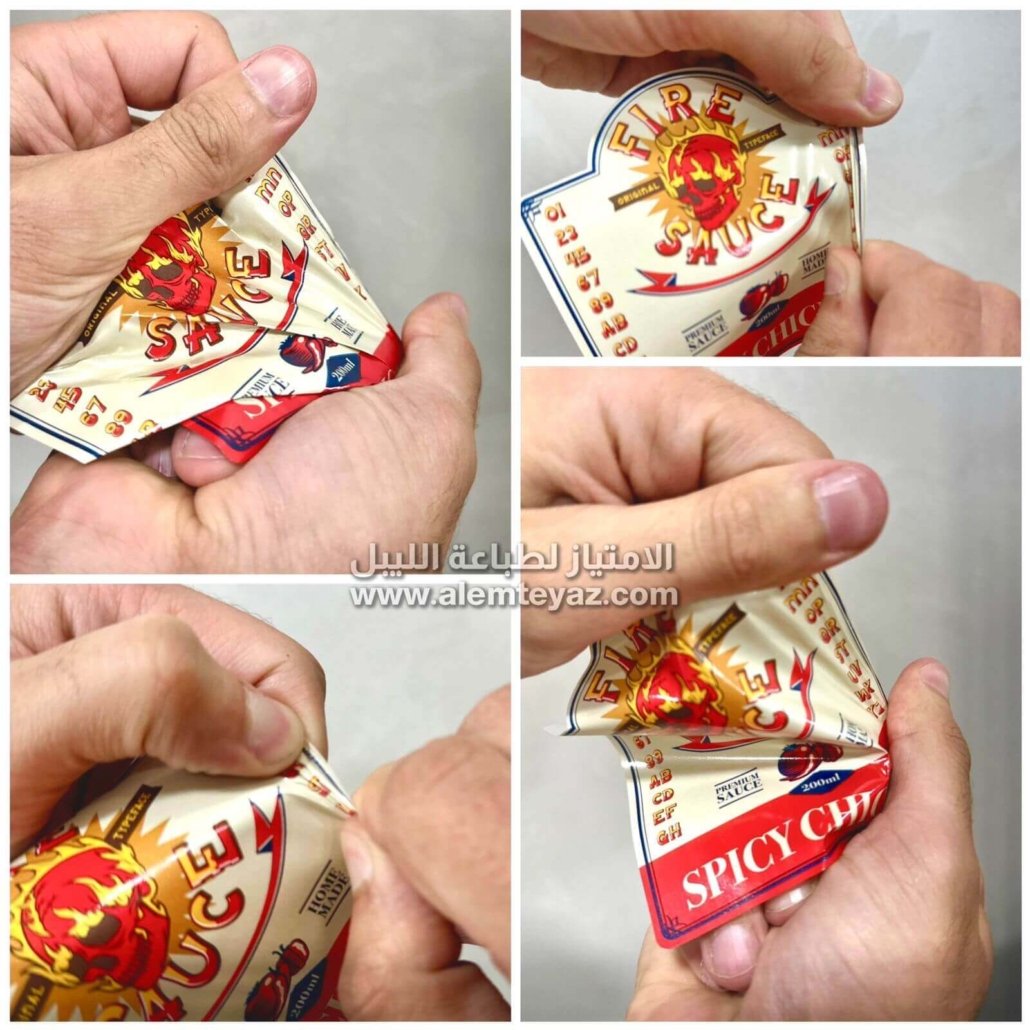
Multi-layer printing
- An approved solution for multilingual prints. The label opens like a leaflet and returns to its closed position, so the usable area doubles without changing the pack size.
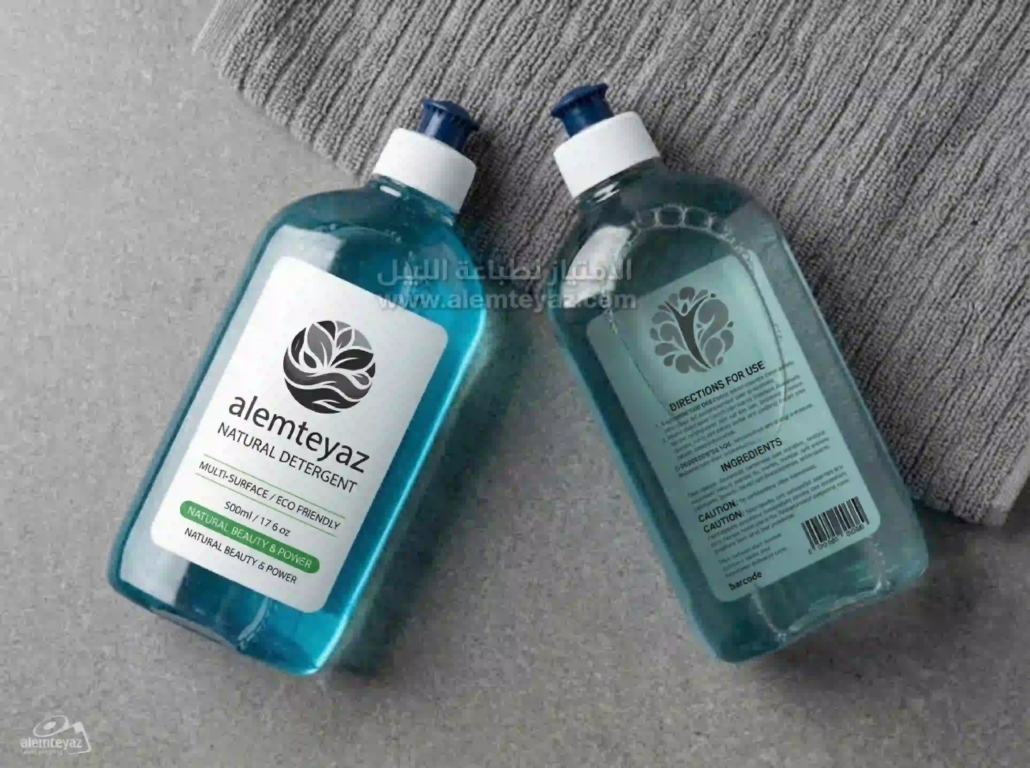
Double-sided printing
- Made for transparent packs, where the information is read through the product.
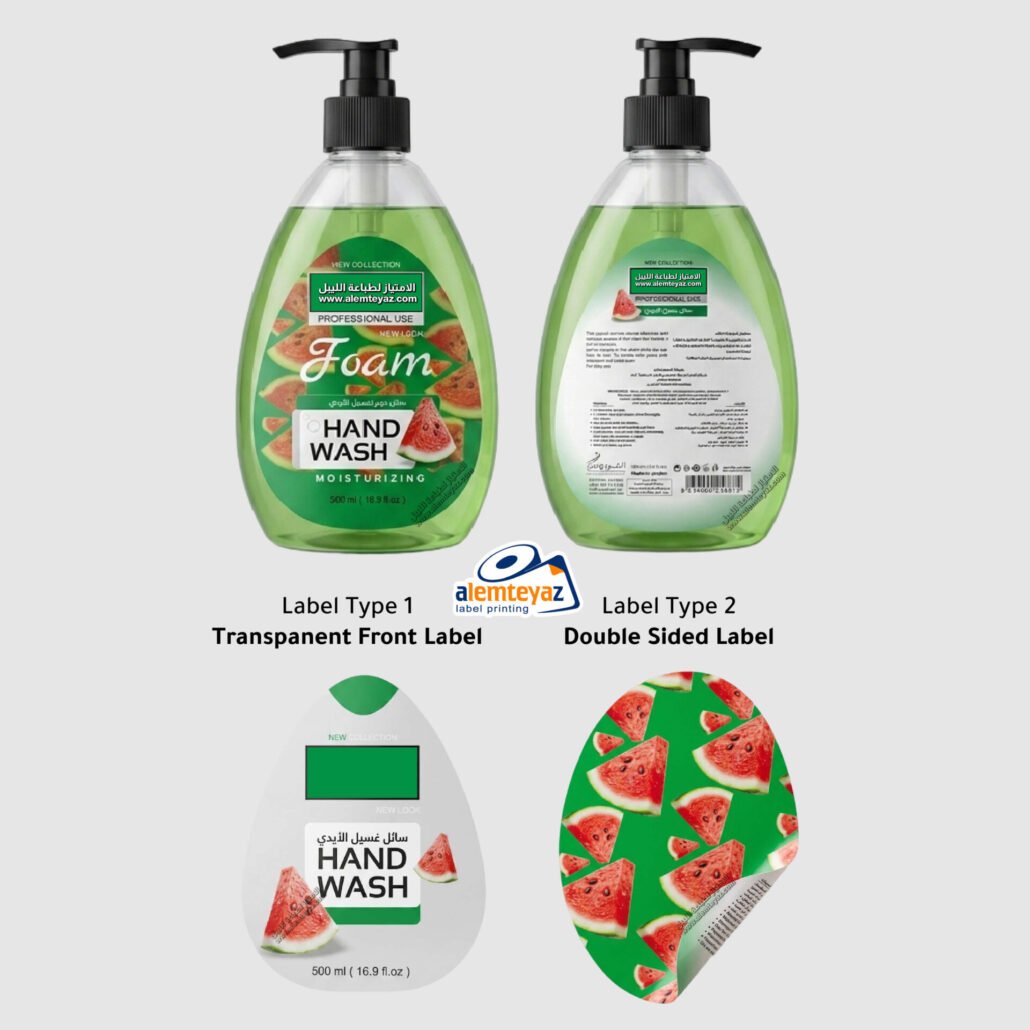
Duplet printing
- It requires a transparent pack. The print goes on the adhesive side of the label, so the design can be seen from the back.
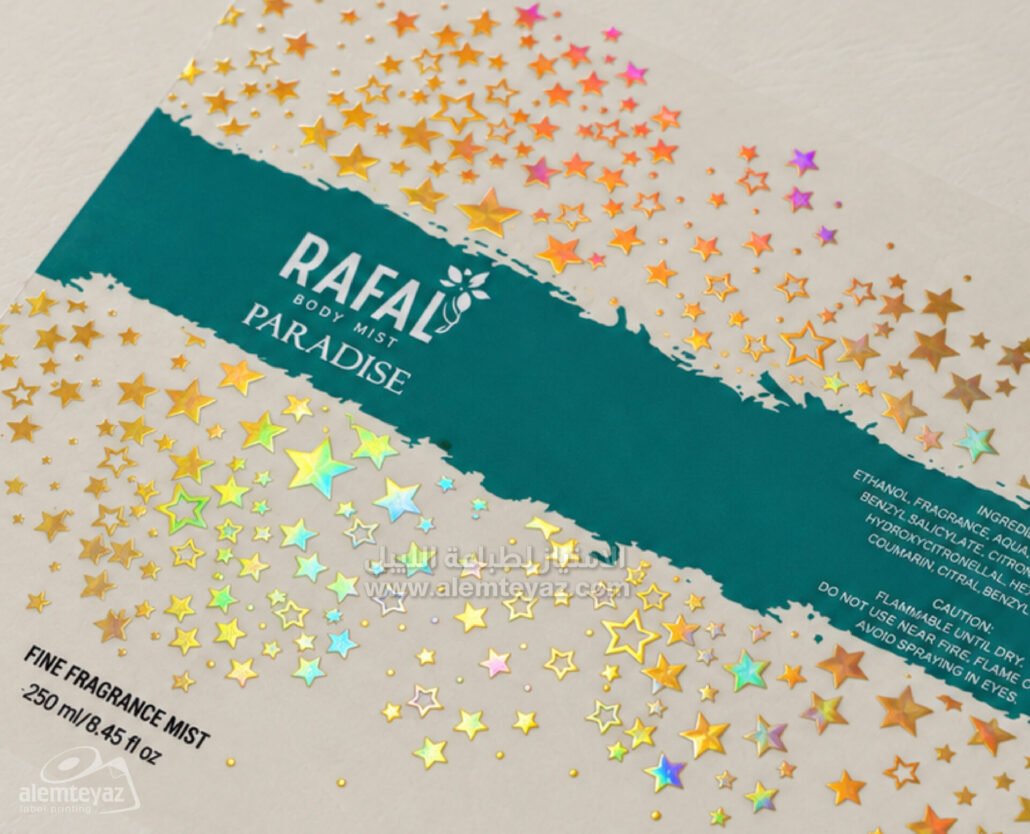
Decorative add-ons
- More than 13 add-ons can be combined to give your product style and appeal.
- They include laser, hologram, hot-foil shine, embossing, texture, serial numbering, and many more.
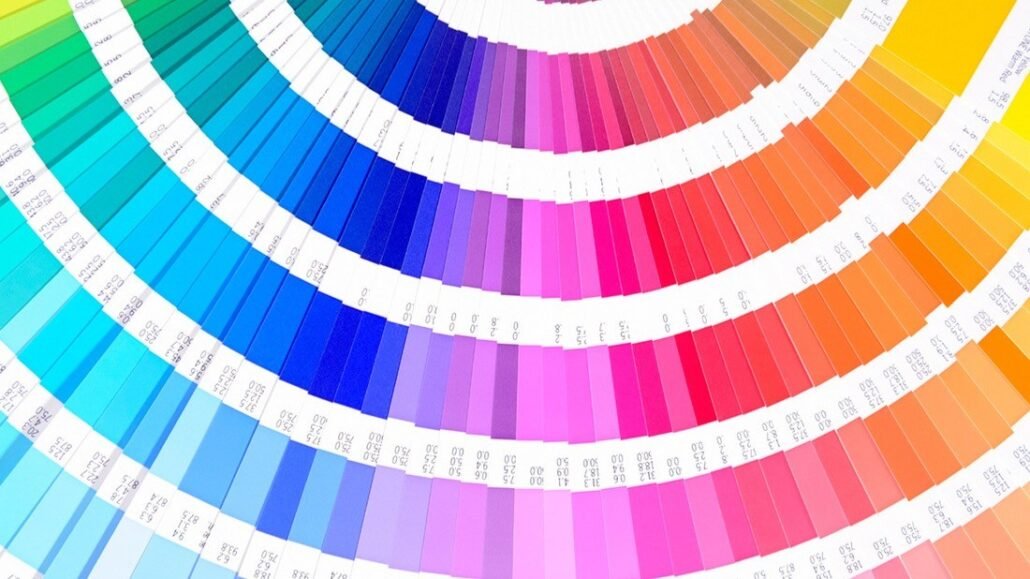
Digital or flexo color printing
- Digital printing for multiple SKUs in small quantities.
- Flexo printing for large quantities, with very competitive prices.
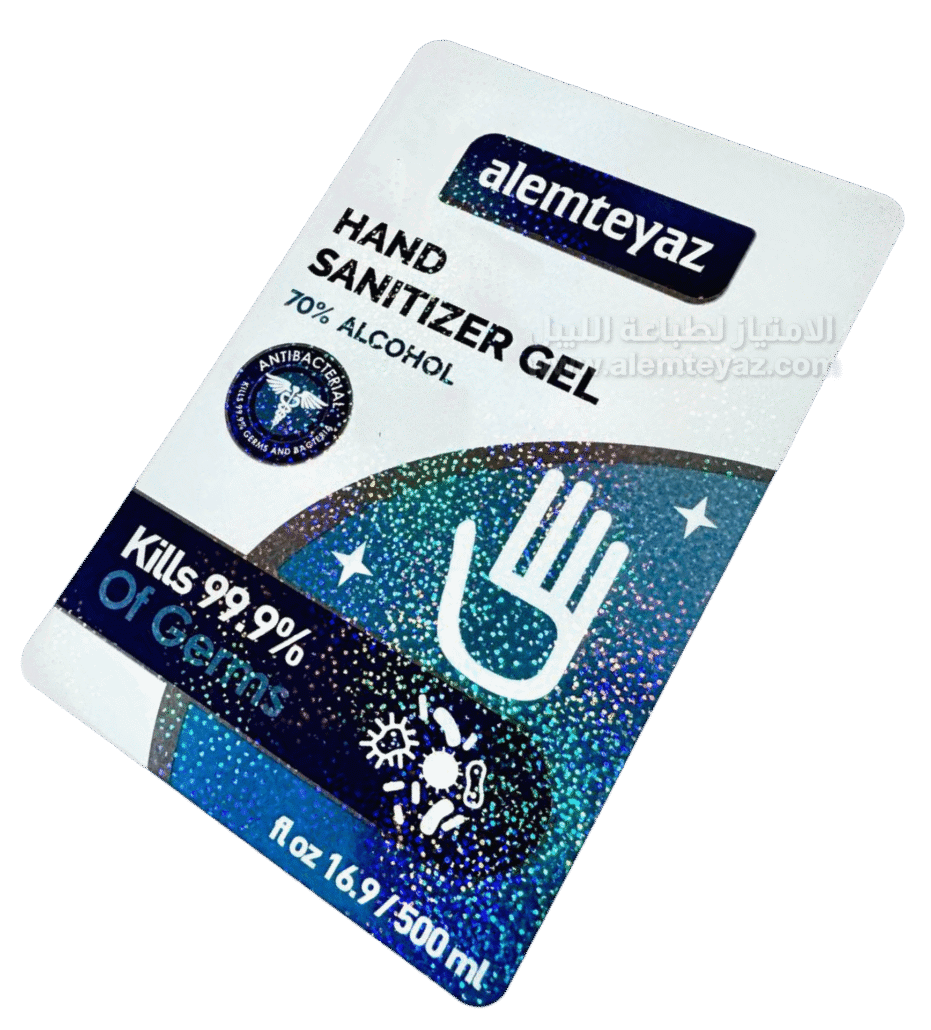
Animated hologram touch: Cast & Cure
- Each movement of the pack reveals a different color and reflection, giving the label a moving presence that catches the eye.
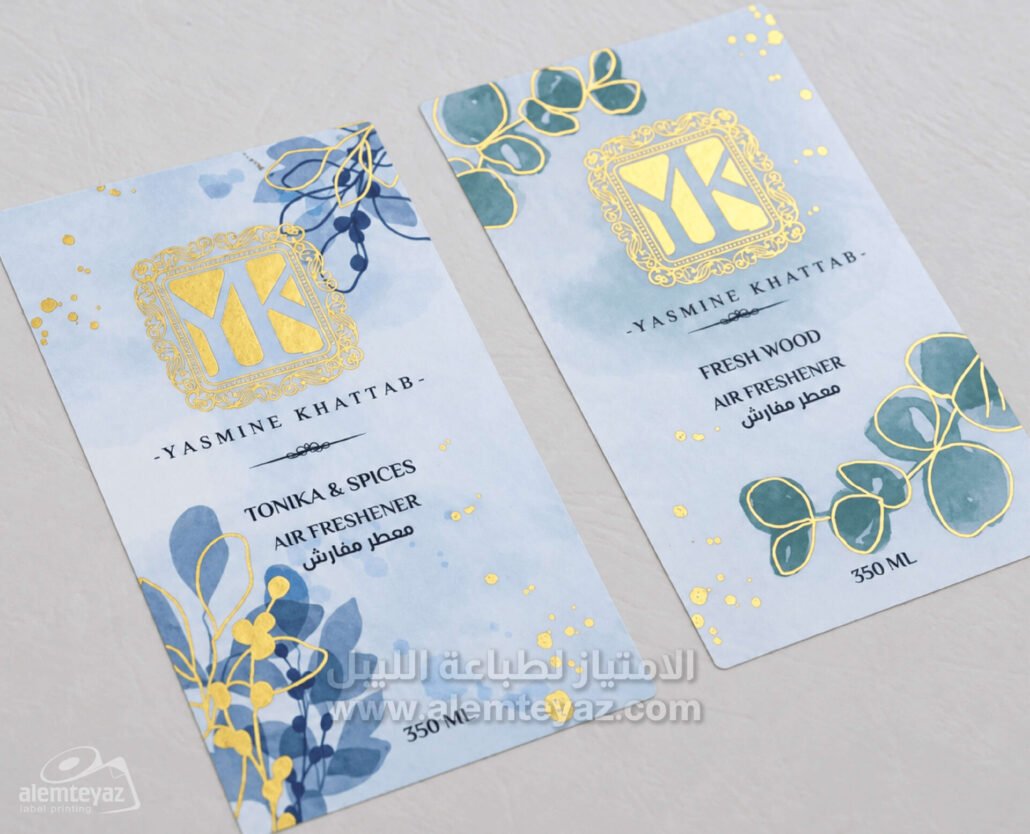
Hot foil stamping
- It is used in premium product lines. We do not recommend it for economy products, because the cost does not fit the product margin. Foil can be replaced with a metallized label, which costs less.
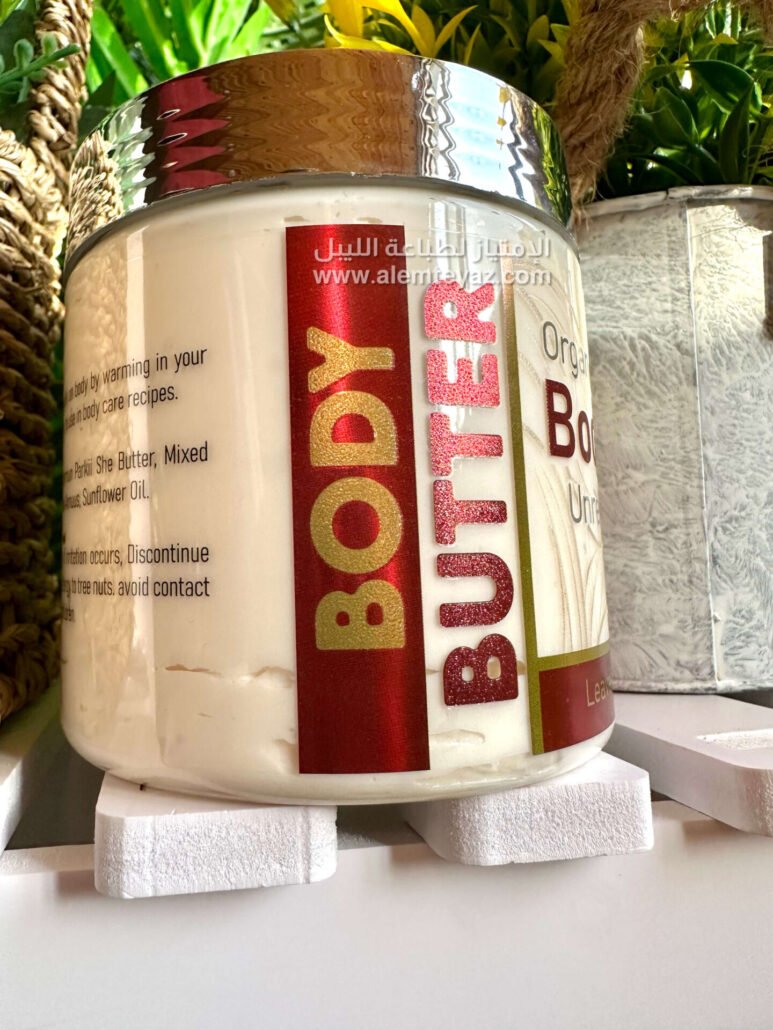
Textured finish
- This finish gives an earthy, sandy feel.
- It is a creative alternative to raised effects and costs less.
Metallized label
- It serves premium product lines and high-value corporate products.
- Special finishes can be added, such as embossing, tactile texture, or shiny gold.
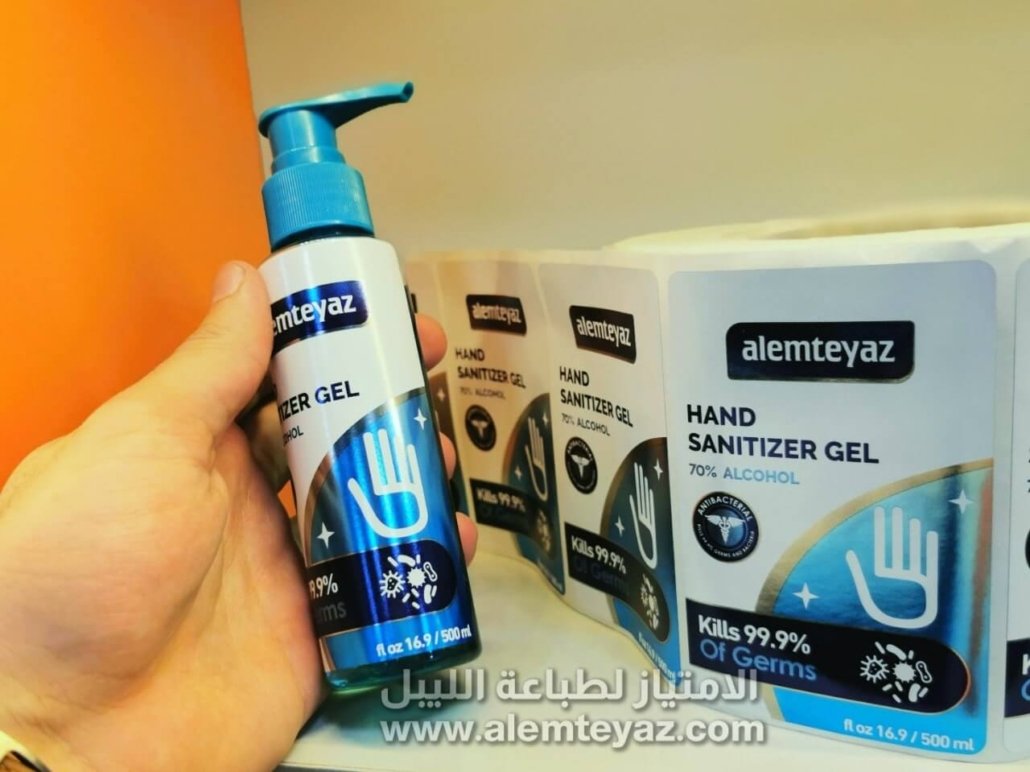
Transparent label
- It is known for showing what is inside the pack.
- The transparent adhesive we use at Al Emteyaz is made from plastic materials that are both strong and flexible.
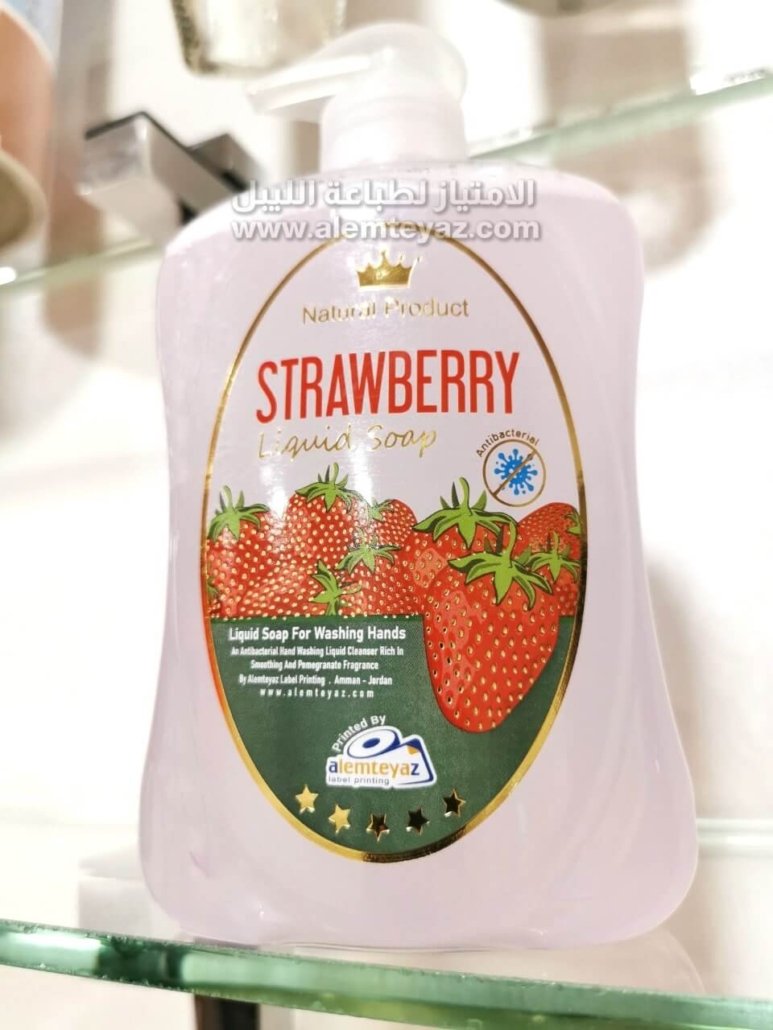
Plastic Label
- Excellent resistance to water and humidity.
- It can handle oils, detergents, and light chemicals.
- It does not tear easily compared with paper labels.
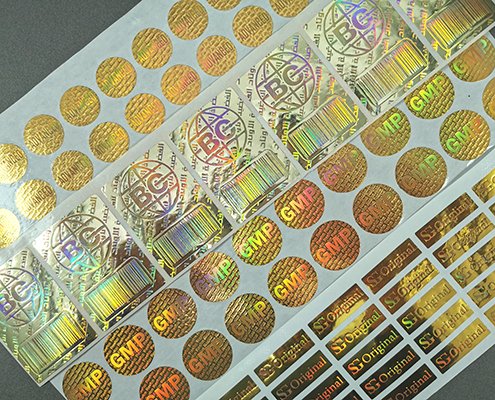
Anti-counterfeit hologram printing
- This type of printing adds protection with a stamp that proves the product is genuine and not counterfeit.
Get consultation
Ask anything on WhatsApp. We'll guide you step by step.
Get quote
Your price in one minute. We follow up directly.
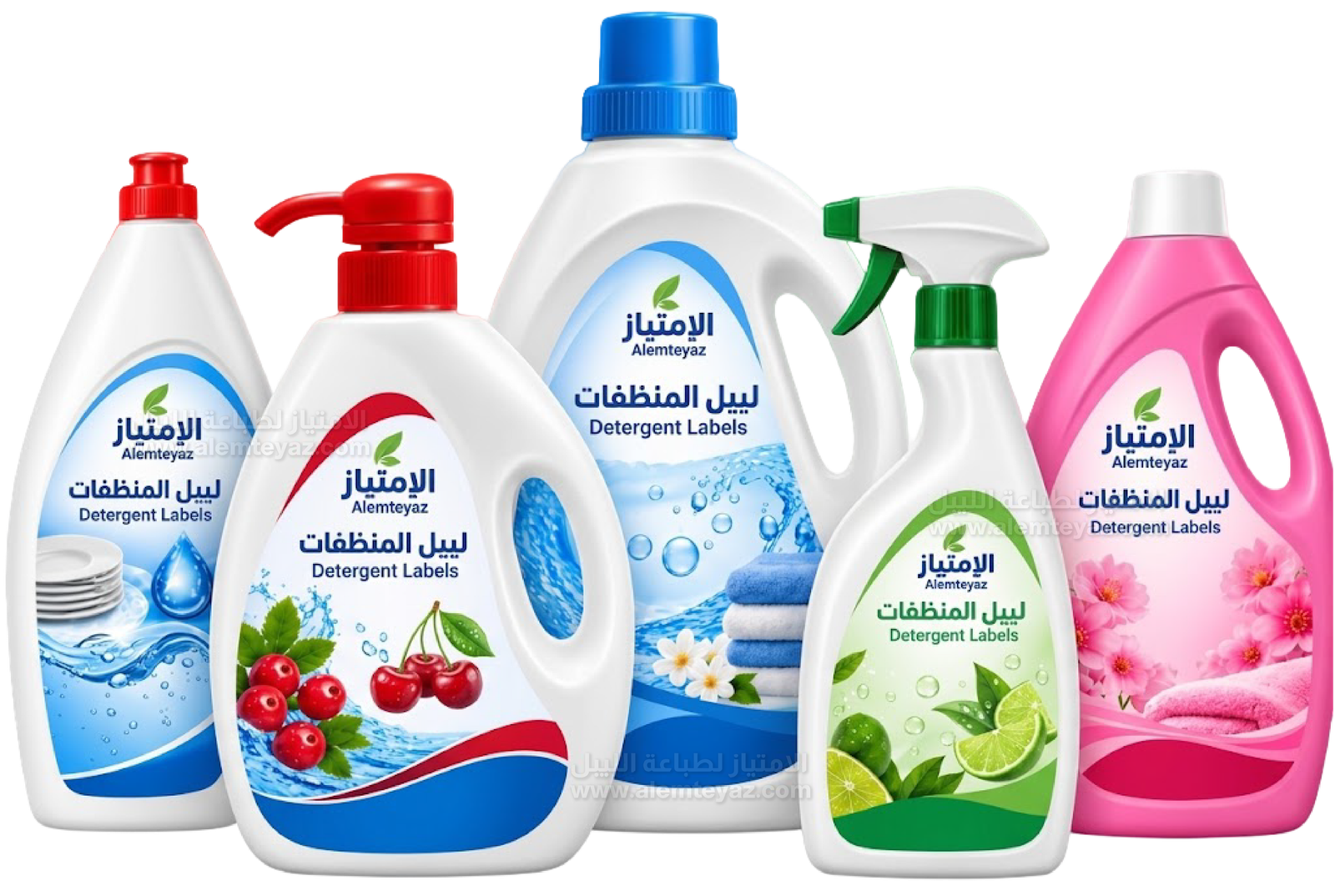
Markets served by the cleaning and chemical sector
This sector is broader than it looks. We serve five main markets here, each with its own needs:
- Household cleaners: dish soap, floor cleaner, toilet cleaner, glass cleaner, linen freshener, bleach and chlorine.
- Institutional cleaners: products for hotels, hospitals and restaurants, in 4 and 20 liter containers.
- Basic chemicals: citric acid, caustic soda, and raw materials sold to other factories.
- Car care products: shampoo, polishes, engine cleaners and motor oils.
- Private label filling: factories that fill products for other brands.
We help cleaning and chemical companies with the following:
- Choosing a material that can handle contact — plastic, transparent, metallized or paper label, chosen based on the product formula and pack material.
- Making the product stand out on the shelf with a gold or silver touch on a transparent material.
- Highlighting the brand through a raised texture that can be felt before it is read.
- Fitting multi-language warnings within the pack area using a multi-layer label.
- Showing the information through the transparent pack by printing on both sides (See-Through).
- Controlling color consistency between runs with a spectrophotometer measurement system.
- Balancing cost against quantity — flexo printing for large runs, and digital for small and multi-SKU runs.
- Meeting packing deadlines with delivery times and competitive prices for this sector specifically.
Two problems keep coming up for factories in this sector. They are the most common and the most worrying for factory owners.
Problem one: unclear printing and inconsistent color
The product reaches the shelf in a color that differs from the previous print, or with details that look faded. That affects the brand directly in the eyes of the distributor and the buyer.
We handle this with a spectrophotometer. After the first run is approved, its color is measured and recorded as a permanent reference for the client. Each later run is measured against that same reference, and the color deviation is checked before production continues.
The difference is that a color judgment becomes a readable number, not a visual estimate that changes with the lighting and the person. That is what makes the tenth order match the first.
Print clarity is set during file preparation: image resolution, sharpness of fine lines, and color separation suited to the chosen material.
Problem two: the label peels off the pack surface
The most common complaint in this sector. The label is applied correctly, then its edges lift or it comes off completely after weeks in storage.
In most cases the cause is not print quality, but an adhesive that does not match the pack surface. Polyethylene packs have low surface energy, and regular adhesives do not bond well to them. Add to that the curve of the pack, warehouse humidity, and any grease left on the surface from manufacturing.
So first, we need to ask: What are the storage and transport conditions?
Before approving any production order, we give the client a printed sample. It is applied to the actual pack and left under real storage conditions. This step has proven its value by avoiding full production orders that would have been rejected after delivery.
Get consultation
Ask anything on WhatsApp. We'll guide you step by step.
Get quote
Your price in one minute. We follow up directly.
Answers and FAQs
These are the questions factories in the cleaning and chemical sector ask us most, ordered from price to delivery. Each answer is based on real production cases, not assumptions.
Cost and pricing:
1. What determines the price of a cleaning label?
The price is set by four factors: material, size, number of colors, and the quantity needed for each item. Material has the biggest effect. The gap between paper and plastic adhesive is a real difference in cost per thousand pieces. Quantity works the other way: the higher the quantity per item, the lower the cost per piece, because setup costs are spread over more pieces.
3. Can label cost be reduced without compromising quality?
Yes, through three steps that do not change the technical specification of the label.
First: standardize the size. We review your items together. Items with similar pack sizes can share one size. This reduces the number of cutting dies and standardizes run settings.
Second: adjust the color system. We limit Pantone colors and use CMYK for the rest, which lowers the cost. We can also run the second and third orders on the same color setup as the first, which lowers the cost further.
Third: review the ordering cycle. Instead of ordering a quantity every two months, we look with you at combining it into one production order. Spreading setup costs over a larger number of labels reduces the cost.
We review these three points with you before issuing the quote.
Specs and materials:
Our warning text is long and in three languages, and the pack space is limited. What is the solution?
Adopting multi-layer printing. The label has a layer that opens and closes, which multiplies the usable area several times without changing the pack size. This solution is approved globally for chemical products that carry dense regulatory disclosure.
How do we choose between white and transparent adhesive?
Choose transparent when the product’s own color is the selling point, and white when dense information needs a high-contrast background. Transparent gives a ‘no-label’ look and makes the pack look cleaner on the shelf. Most competitors in the local market still use traditional white, and that is where the chance to stand out lies.
Ordering process:
What information is needed to issue a quote?
Four items: product type, label size, pack material, and the quantity needed for each item. Attaching a photo of the pack shortens the specification stage and reduces pricing back-and-forth. If the filling is automatic, add the specifications of the filling machine.
If you have no prior knowledge, or need a direct quote, you can order from here.
Is the product supplied on a roll?
This depends on your filling line. In automatic setups, the label is supplied as a label roll (Label Roll) to the machine’s specifications: winding direction, inner core diameter, and the number of labels on each roll.
In manual setups, we recommend ordering the label on a roll, because it makes manual labeling easier. The label comes off the roll easily, which saves time.
How long does production usually take?
Digital production orders are completed within 2 to 4 working days of design approval. Special finishes such as embossing or hot foil stamping need extra time, which is stated clearly in the quote, so your filling plan is based on a confirmed delivery date and not an estimate.
Get consultation
Ask anything on WhatsApp. We'll guide you step by step.
Get quote
Your price in one minute. We follow up directly.