
Browse by target market
What the shipping and warehouse sector needs:

Blank labels
- Blank label with no print, in color or white.
- You can have it made in any of the available label types.
- Blank roll options are explained on the barcode label page.
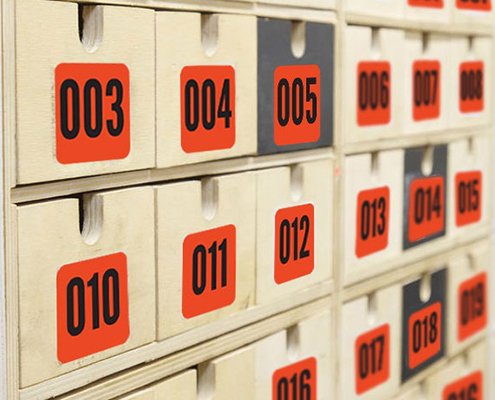
Regular paper label: for data that lasts months
- It needs a ribbon when printing on a barcode printer. Its print is more stable, and it doesn’t fade with normal heat.
- Suited to data that stays in the warehouse for months.
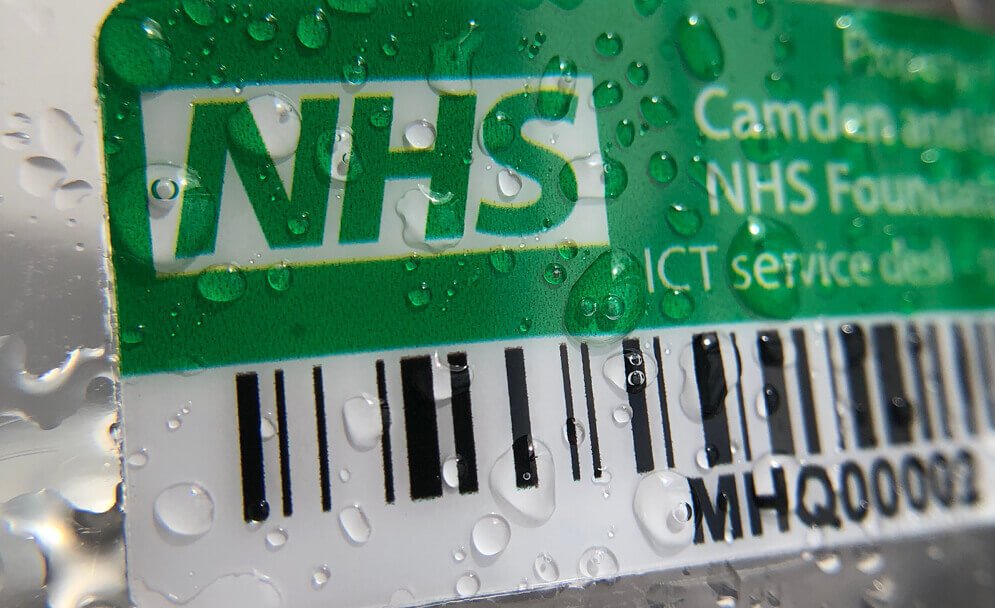
Plastic label: water and moisture resistant
- It resists moisture, water and tearing, and lasts the longest of the three materials. It needs a suitable ribbon if you want to print on it with your printer.
- Suited to humid and refrigerated environments, and long use on shelves and pallets.
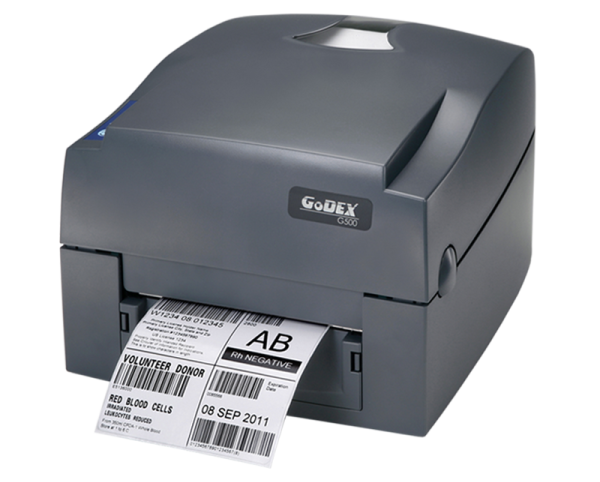
Thermal paper label: for short-term shipments
- It is printed directly by the printhead heat, with no ribbon. It is the lowest-cost material.
- Suited to packages with a short life, such as a parcel delivered within days.

Color printing: your logo on every parcel
- A label with your logo and colors that identifies your brand before the parcel is opened.
- Color coding for shelves, which reduces picking errors in the warehouse.
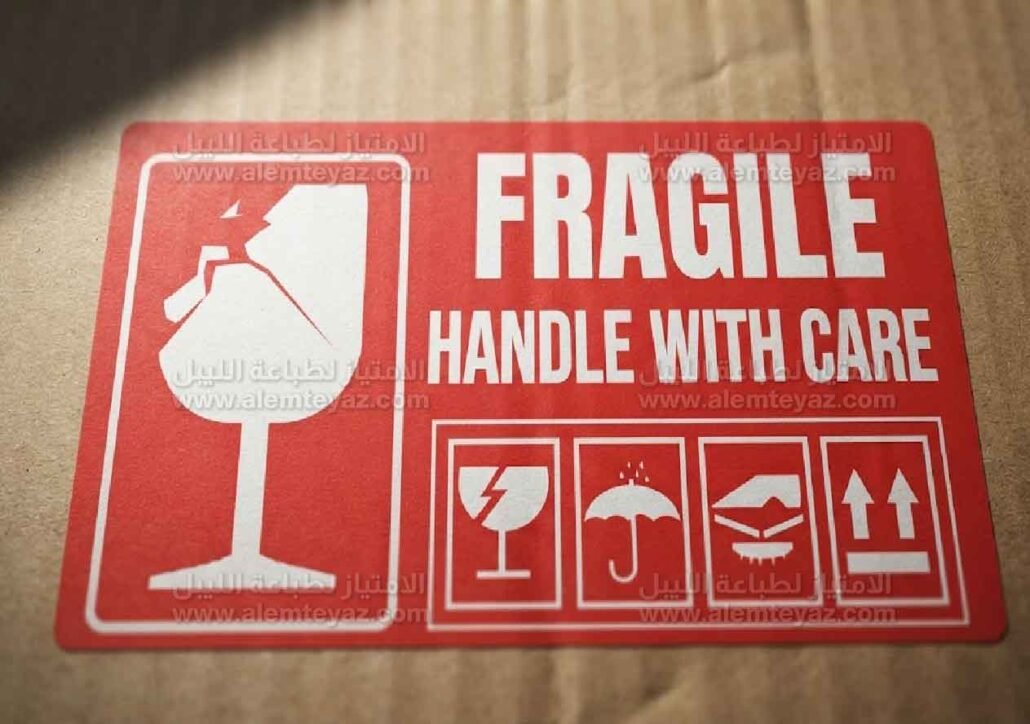
Handling and warning labels:
- Fragile label, “This side up”, and “Do not stack”.
- Labels that describe how to handle the parcel, and they can be printed on fluorescent material.

Removable label: for pharmacy, lab and restaurant warehouses
- It comes off easily without tearing or leaving any noticeable residue on the surface.
- Suited to shelves, boxes and containers whose contents change or that are reused.
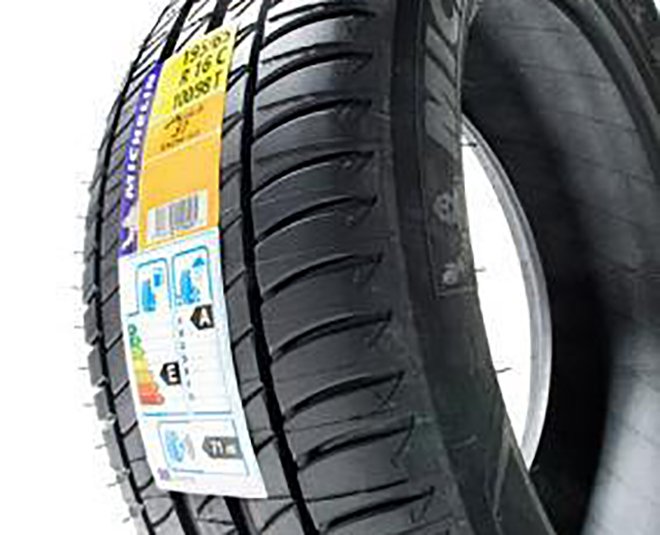
Hard-to-remove label: for rough surfaces and cardboard
- Strong adhesion that holds on cardboard, rough surfaces, and fabric mattress covers.
- It doesn’t fall off during transport, so the shipment doesn’t lose its data.

Tamper-evident label to protect the shipment from tampering
- It is placed over the carton opening or box lid, and it is damaged when someone tries to remove it.
- The recipient knows right away if the shipment was opened before arrival.
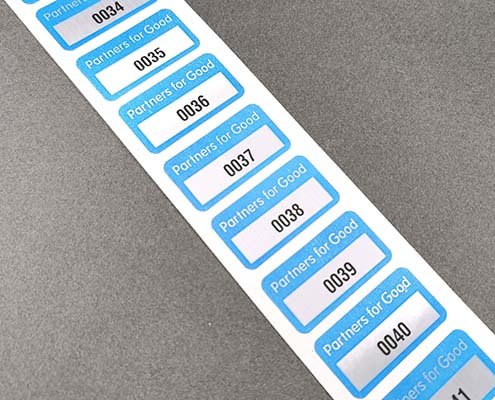
Serial numbering
- A unique number for each box or pallet that never repeats, and it can come with a sequential QR code.
- The result: faster stock counts, more precise tracking, and an end to manual numbering errors.
Get consultation
Ask anything on WhatsApp. We'll guide you step by step.
Get quote
Your price in one minute. We follow up directly.
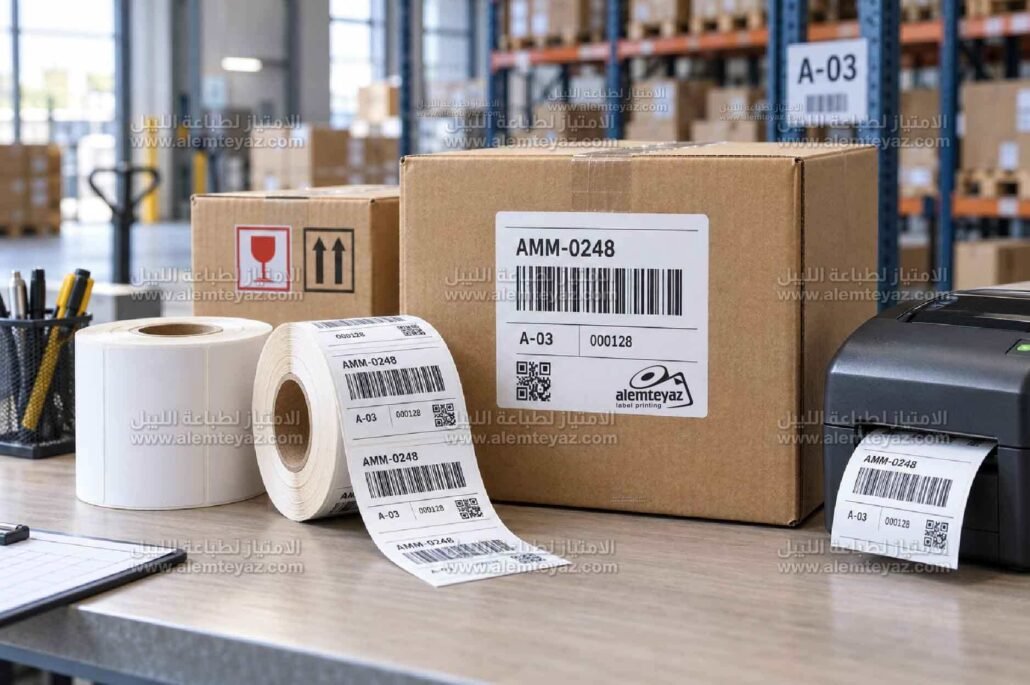
Markets covered by the shipping and warehouse sector
This sector includes every party that moves, stores or tracks goods. The main markets are:
- Shipping and delivery companies: parcel labels, sender and recipient data, and tracking numbers.
- Warehouses and third-party logistics (3PL) companies: labels for shelf locations, pallets and boxes.
- Factories and wholesalers: tracking incoming materials and finished products, and stock-count and inventory control labels.
- Online stores: shipping labels, and labels that carry the store’s identity on the carton and bag.
Comparison of the three materials:
| Criterion | Thermal paper | Regular paper | Plastic |
|---|---|---|---|
| Lifespan | ❌ Short | ⚠ Medium Longer than thermal. | ✅ Long |
| Print stability over time | ❌ Fades Over time and with heat. | ✅ Stable | ✅ Stable Does not wear off when cleaned. |
| Moisture and tear resistance | ❌ Weak | ⚠ Weak | ✅ High Handles repeated testing. |
| Tolerance to normal heat | ❌ Can't handle it | ✅ Handles it | ✅ Handles it Even hair dryer heat. |
| Cost | ✅ Lowest | ✅ Low | ⚠ Relatively higher |
| Printing in-house | ✅ Directly No ribbon needed. | Needs a ribbon | Needs a ribbon |
| Blank label quantities | From 500 up to 1 million pieces | From 500 up to 1 million pieces | From 500 up to 1 million pieces |
| Full-color printing | ⚠ Large quantities | ⚠ Medium to large | ✅ From 500 pieces |
| Best for | Temporary promotions and fast-moving stock. | Items not exposed to moisture or frequent handling. | Gold and silver pieces, and items that are tried on and cleaned. |
Al Emteyaz’s experience with the shipping and warehouse sector since 2001
Since 2001 we have worked with companies that rely on labels at every stage of the goods’ journey. We learned that shipping label problems rarely show up at the printer. They show up later: the product is exposed to heat in the truck, or the label doesn’t stick well to the carton.
So we start with questions before quoting a price:
- What surface will the label be applied to?
- How long must it stay readable: days or months?
- What type of printer do you have: direct thermal or ribbon?
- What are the transport and storage conditions: heat, humidity, or cold?
Based on these answers, we set the material, roll size and core diameter. Then we send a sample for you to test on your printer and carton before the full order.
Al Emteyaz is an accredited printer with GS1 Jordan:
GS1 Jordan is the body responsible for issuing and accrediting global barcode codes in Jordan.
A shipment passes through several stops: receiving, sorting, loading and delivery. Any barcode that can’t be read at one of them stops the shipment or forces manual entry.
So we follow GS1 standards, making sure barcode printing works with warehouse management systems and commercial scanners, in Jordan and in export markets.
Questions and answers:
How much do shipping labels and barcode rolls cost?
The price depends on material, size, quantity, number of colors and finishes. A blank thermal roll is the lowest cost, and a color-printed plastic label is the highest. Send us the size, the quantity and your printer model, and you’ll receive an accurate quote.
What is the most economical way to buy shipping labels in large quantities?
Order directly from the printer, with rolls prepared for your printer and in a quantity that covers several months of use. The price per piece drops as the quantity rises.
Can my company logo be printed on a shipping label?
Yes, in one color or in full color. We leave a blank area on the label for you to print shipment details on your printer, or to your specifications.
Why does a thermal label fade or darken over time?
Because the thermal layer reacts to heat, light and friction after printing. A hot truck, a shelf near sunlight and long storage all speed this up. We set the right material once we know how long it will be used and under what conditions.
Why does ink rub off the label with friction?
Usually because the ribbon doesn’t suit the material, or because the material is thermal and can’t take friction. The problem shows up days after transport or storage. Tell us the material and ribbon you use, and we’ll identify the cause.
Can I use a ribbon with a thermal label?
It’s not necessary. Thermal labels are designed to be printed directly by the printhead heat, with no ribbon. Adding a ribbon raises the printing cost without any benefit. If you need print that lasts longer, regular paper or plastic with a ribbon is the better choice.
Can labels handle freezing and cold rooms?
Yes, there are materials with adhesive made for cold. A regular label may lose its stickiness in the cold. We prefer that you tell us the product’s storage conditions so we can recommend the right material.
What’s the difference between a barcode and a QR code, and which suits the warehouse?
A barcode carries a number that warehouse systems and standard scanners read. A QR code carries more data, and phones can read it too. Both can be printed with serial numbering on the same label.
Does a "fragile" label actually protect the parcel?
It’s a warning for the loader, not a replacement for good packaging. When it’s clear in color and symbol, it reduces careless handling of the parcel.
What size is a shipping label (waybill)?
The most common size worldwide is 10×15 cm (4×6 inches). A smaller size can be used if the data is less or the parcel is smaller.
Do your rolls fit Xprinter and Zebra printers?
Yes, we prepare the roll to your printer’s specifications, whatever type it is. We need the printer model, the roll width, and the core diameter.
Get consultation
Ask anything on WhatsApp. We'll guide you step by step.
Get quote
Your price in one minute. We follow up directly.